Day 7: Putting It Together: Simulating Your First Genetic Algorthm Cycle in .NET
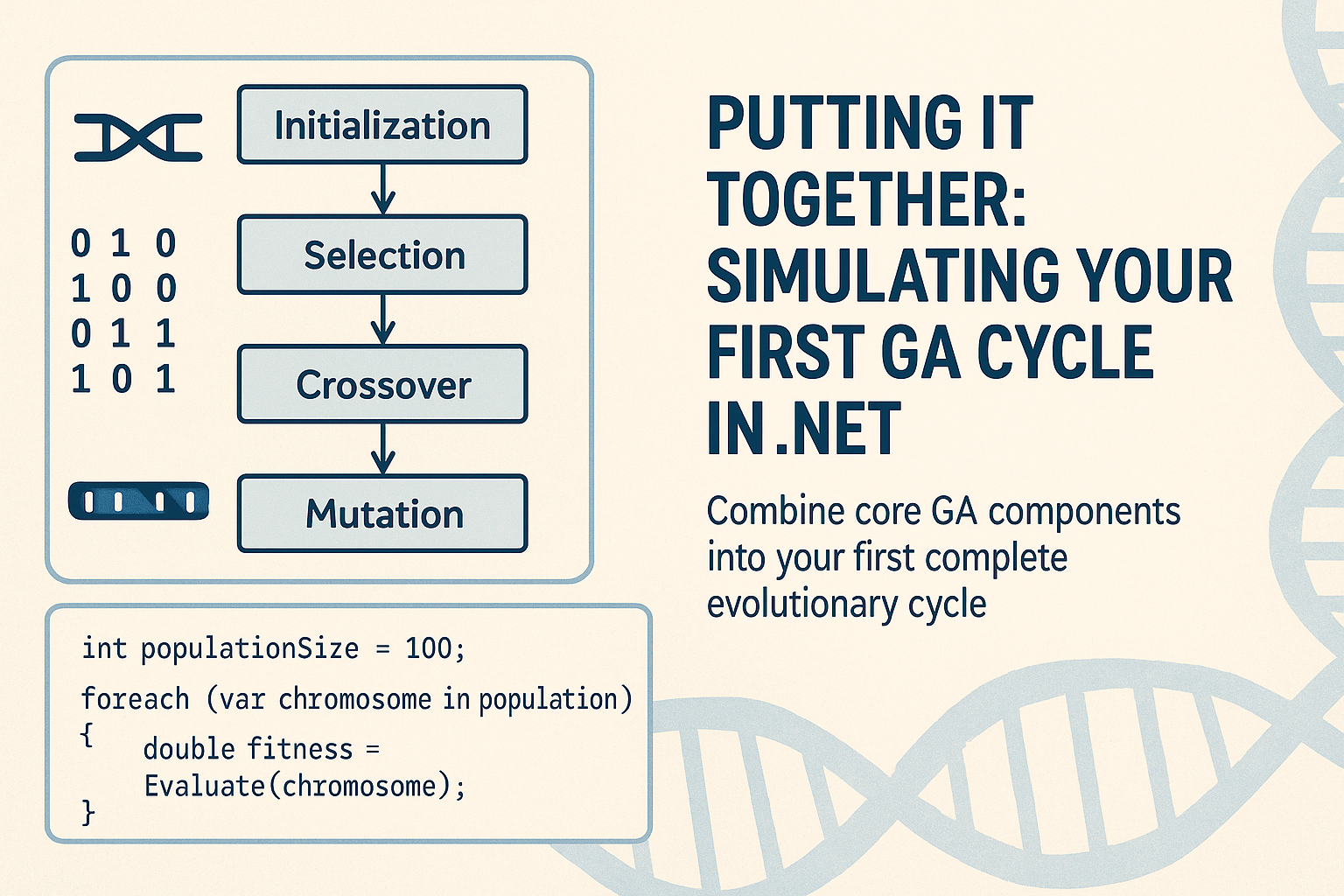
By now, you’ve learned the foundational components of genetic algorithms: chromosomes, genes, fitness functions, mutation, crossover, and selection. Today, it’s time to bring those elements together and run your first complete GA cycle using C# and .NET.
This post walks you through the structure of a single evolutionary loop—initialization, evaluation, selection, reproduction, and mutation—so you can simulate a working genetic algorithm and evolve real solutions.
Continue Reading
Day 6: Roulette, Tournaments, and Elites: Exploring Selection Strategies
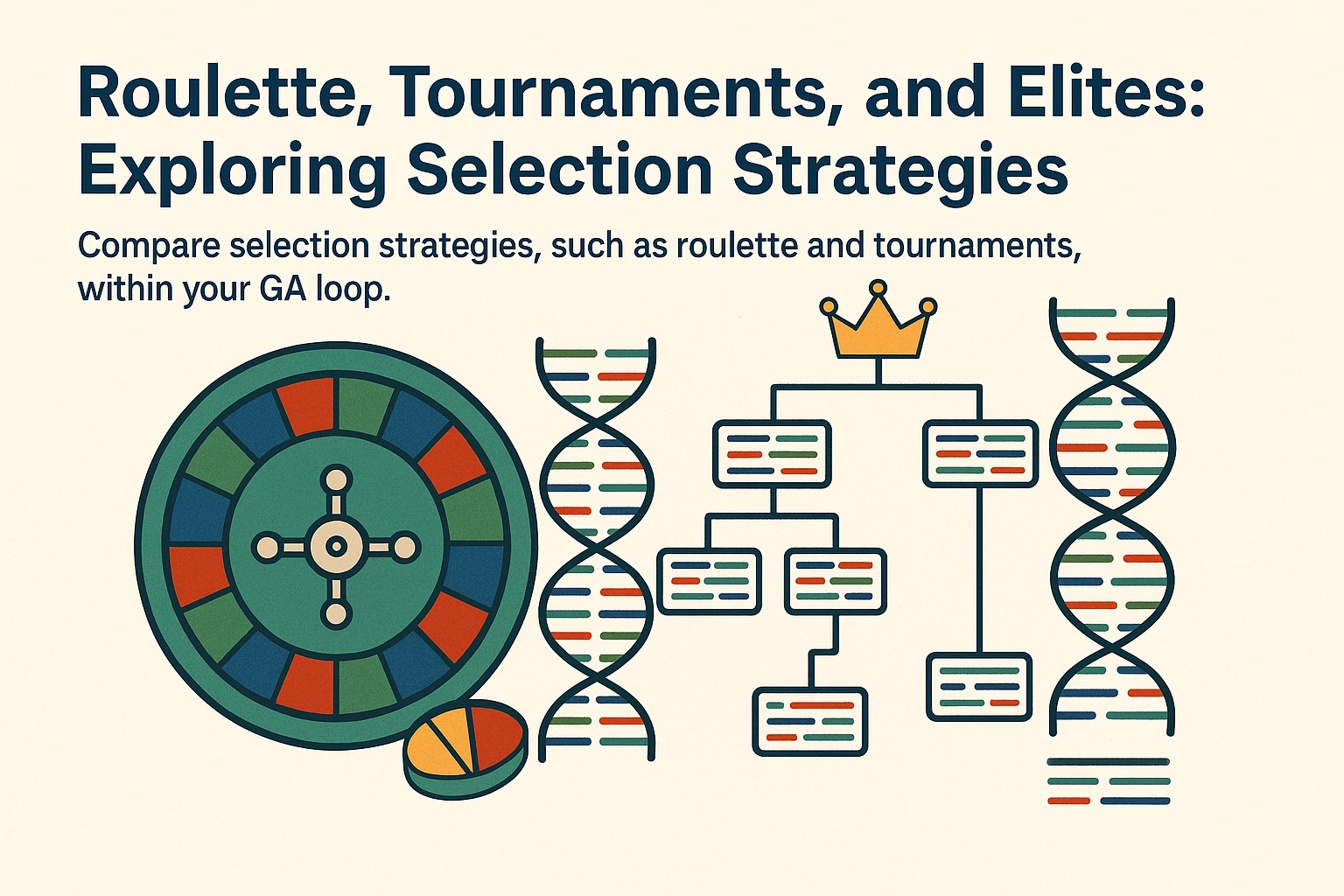
Once you’ve calculated the fitness of each chromosome in your population, the next step in the genetic algorithm lifecycle is selection—deciding which chromosomes get to reproduce and which are left behind.
Selection strategies play a crucial role in balancing exploration (searching new areas of the solution space) and exploitation (refining known good solutions). Choosing the right strategy affects the convergence speed and the overall effectiveness of your genetic algorithm.
Today, we’ll explore the most common selection strategies: roulette wheel selection, tournament selection, and elitism. We’ll compare them and implement each one in C#.
Continue Reading
Day 5: Natural Selection in Software: Implementing Fitness Functions
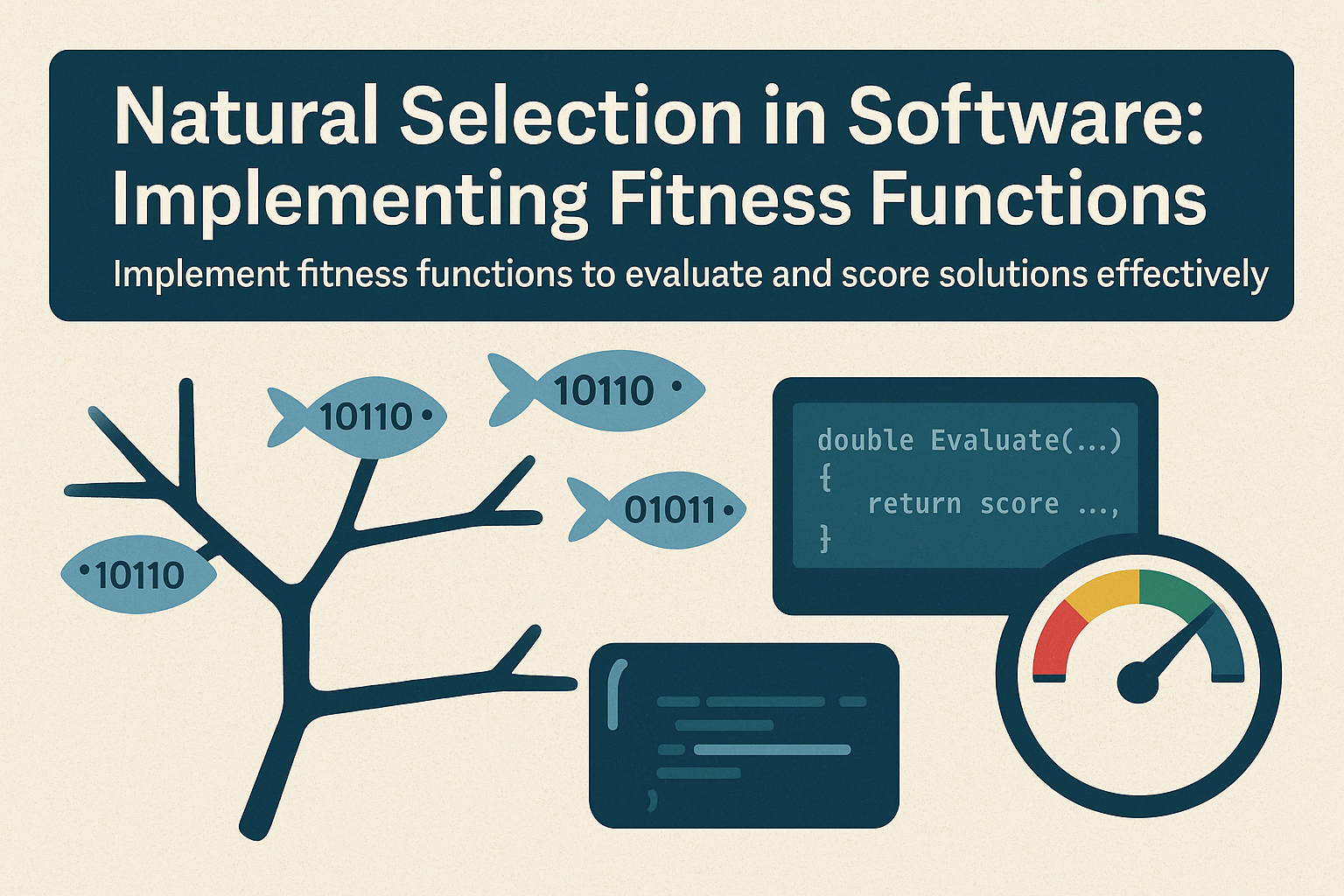
In the natural world, organisms survive and reproduce based on their ability to adapt to their environment. This principle of natural selection is central to the effectiveness of genetic algorithms. In software, our analog to survival is fitness—a quantitative measurement of how well a solution performs.
Today, we focus on the role of fitness functions in guiding evolutionary progress in a genetic algorithm, and we’ll implement them in C# to evaluate and score candidate solutions effectively.
Continue Reading
Day 4: Designing Your First Chromosome Class in C#
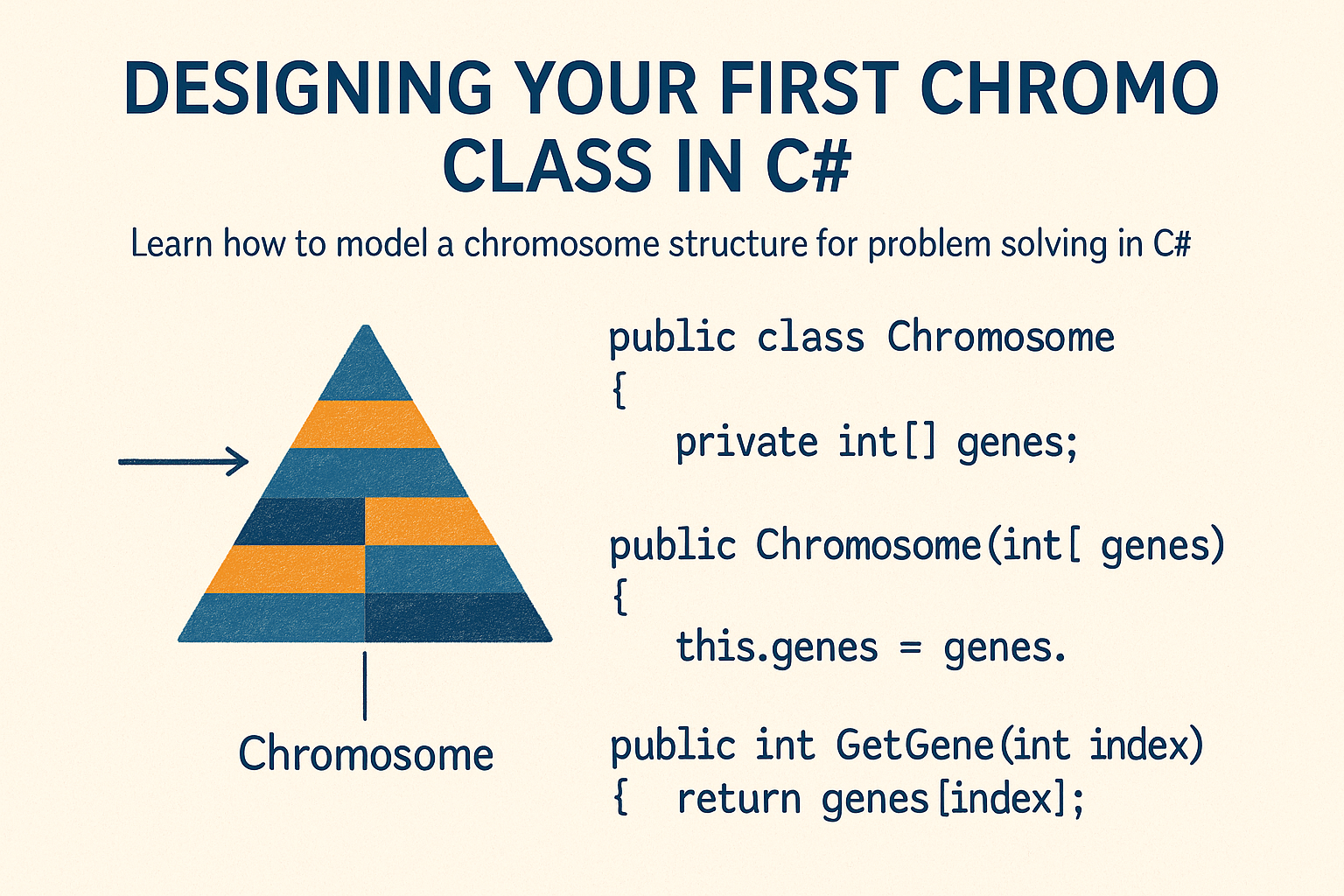
Now that we’ve explored the concept of genes and chromosomes in the context of genetic algorithms, it’s time to write some real code. Today’s goal is to design a reusable, extensible Chromosome class in C# that can serve as the foundation for solving optimization problems using genetic algorithms.
We will not only model the chromosome itself, but also lay the groundwork for operations such as initialization, crossover, mutation, and evaluation. Think of this class as the central actor in your evolutionary simulation.
Continue Reading
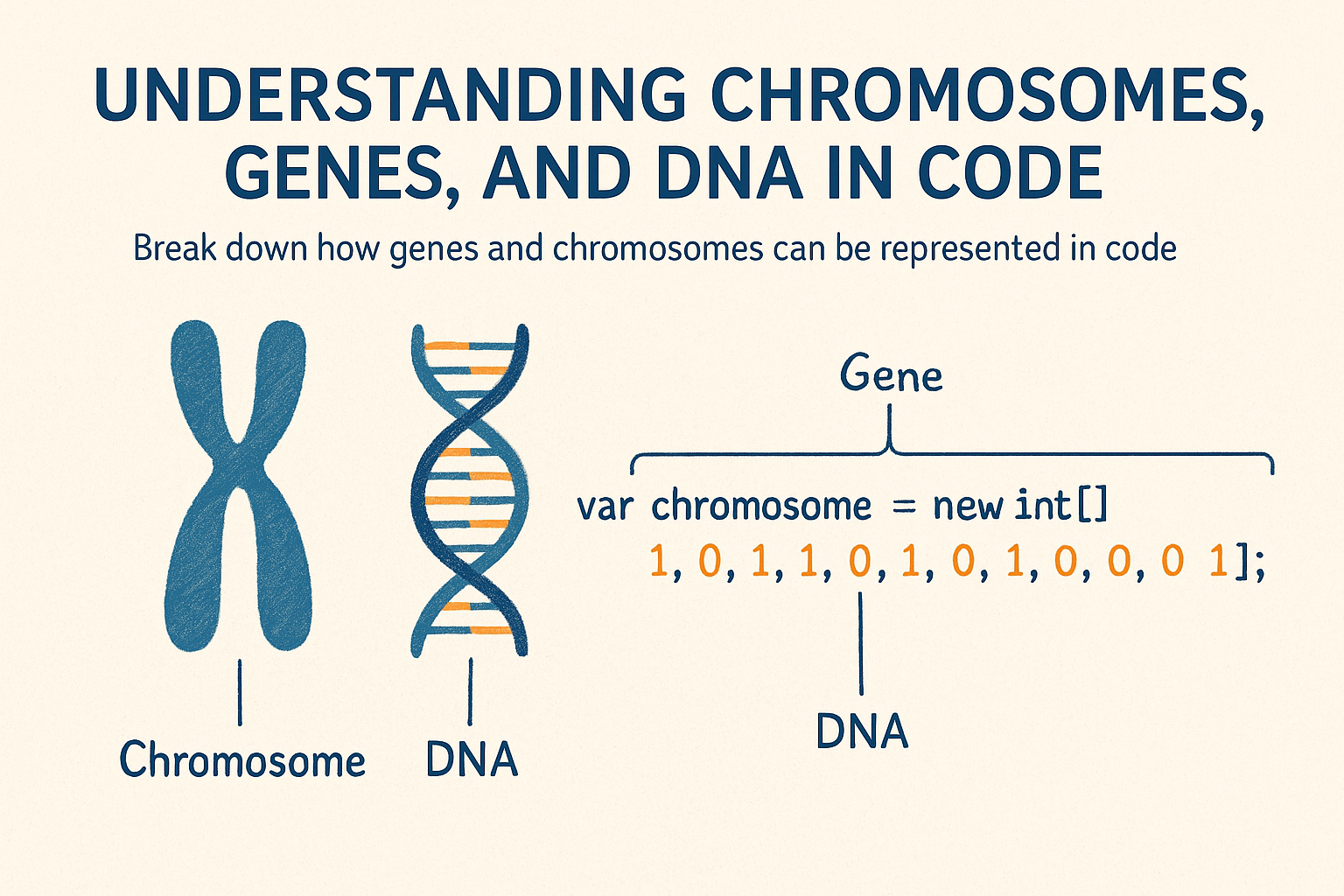
Day 3: Understanding Chromosomes, Genes, and DNA in Code
At the heart of every genetic algorithm lies the concept of evolution, and at the heart of evolution lies DNA. For software developers, the equivalent building blocks are chromosomes and genes. If we want our applications to evolve solutions over time, we need a reliable way to encode, manipulate, and assess those building blocks in our C# programs.
Today, we’ll take a closer look at how we can represent chromosomes and genes in C#, how to choose the right data structures, and how to build a model that is both flexible and performant.
Continue Reading
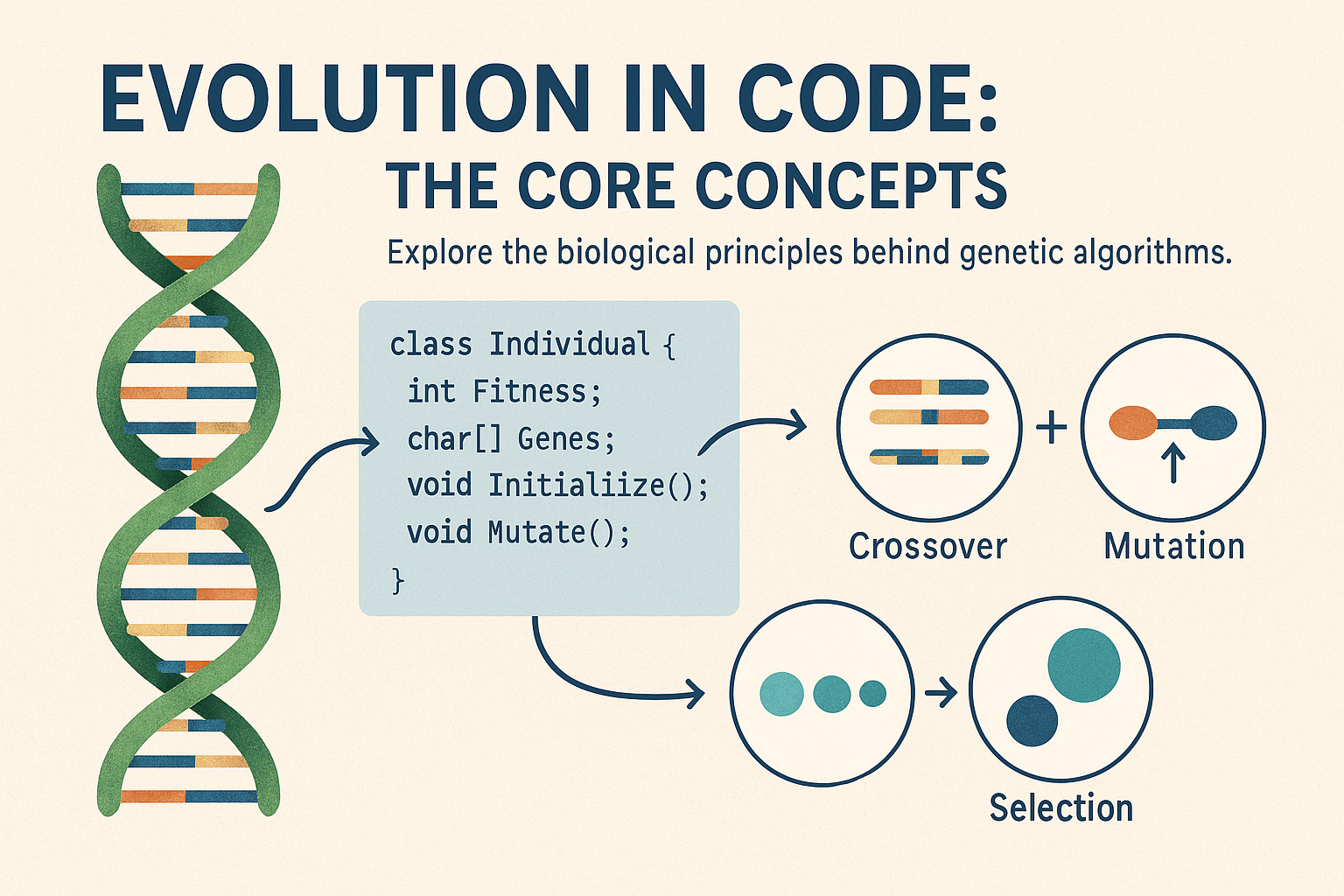
Day 2: Evolution in Code: The Core Concepts
At their core, genetic algorithms are built on five foundational principles that closely resemble biological evolution: 1. Genes and Chromosomes In biology, genes are units of information, and chromosomes are structured collections of those genes. In GAs, a chromosome is a single candidate solution, typically represented as an array, list, or string. Each gene in the chromosome represents one aspect …
Continue Reading
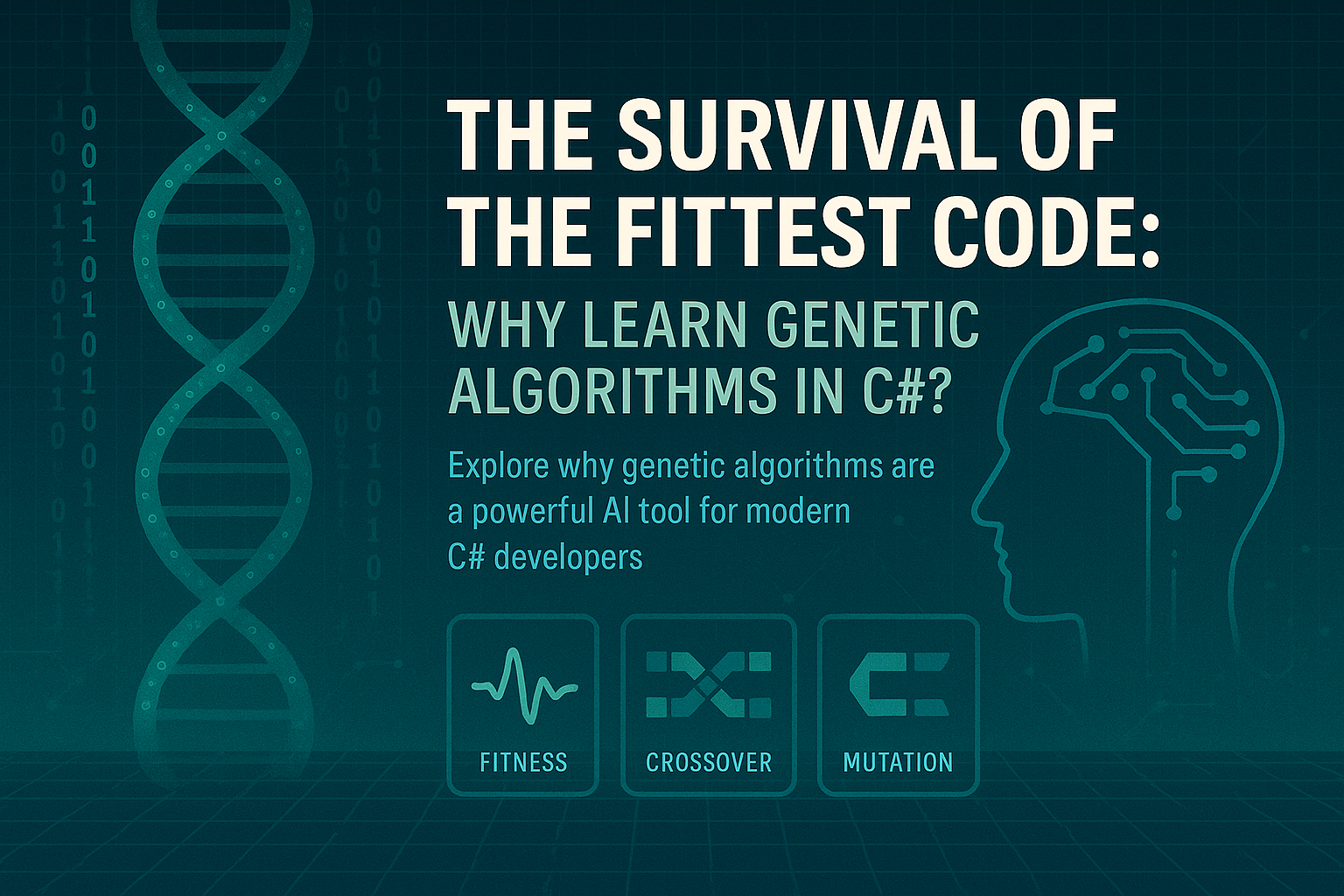
Day 1: The Survival of the Fittest Code: Why Learn Genetic Algorithms in C#?
What if you could write code that evolves? Not just code that runs, but code that iteratively improves its own solutions to complex problems without requiring you to handcraft every edge case. That’s the promise of genetic algorithms (GAs), an AI-inspired method rooted in Darwinian evolution, and it fits surprisingly well in the world of modern C# development.
Continue Reading
Evolve Your C# Code with AI: A 5-Week Genetic Algorithms Bootcamp for Developers
What if your code could evolve like life itself—adapting, optimizing, and learning over time? Welcome to the AI-inspired world of Genetic Algorithms, where we blend evolution with code to solve complex problems cleverly.
Starting this week, I’m launching a 42-day blog series—a 4-week bootcamp—designed to teach C# and .NET developers how to build, run, and scale Genetic Algorithms. From foundational concepts to solving real-world optimization problems, this series is your guide to coding like Darwin meant it.
Using clean, testable C# code, we’ll simulate survival of the fittest with fitness functions, crossover operations, mutations, and elite selection. This isn’t theoretical fluff—it’s practical, hands-on AI for your everyday dev life. Whether you’re optimizing routes, building smarter schedules, or just curious how to make your software think, this series is for you.
Continue Reading
Final Reflections: What Rust Taught Me as a C# Dev
Day 42, and here we are. Six weeks of learning Rust from the perspective of a C# developer. We covered the basics, wrestled with ownership, danced with traits and lifetimes, and shipped a working CLI app. Along the way, there were moments of frustration, lightbulb moments, and more than a few “why is this so hard” conversations with the compiler.
This final reflection is about stepping back and asking the big questions. What did Rust really teach me? What am I taking back to my C# projects? What might be next?
Continue Reading
Performance Check: Does Rust Really Fly?
Welcome to Day 41, and we are almost done! Today, we are putting Rust’s performance reputation to the test. Rust has a reputation for being fast. But how fast? If you have been living in the C# world where the JIT and garbage collector handle things for you this is a good chance to see how Rust stacks up when it comes to raw speed.
Continue Reading