Day 12: Genetic Algorithms’ Elitism for Evolution Survival of the Fittest
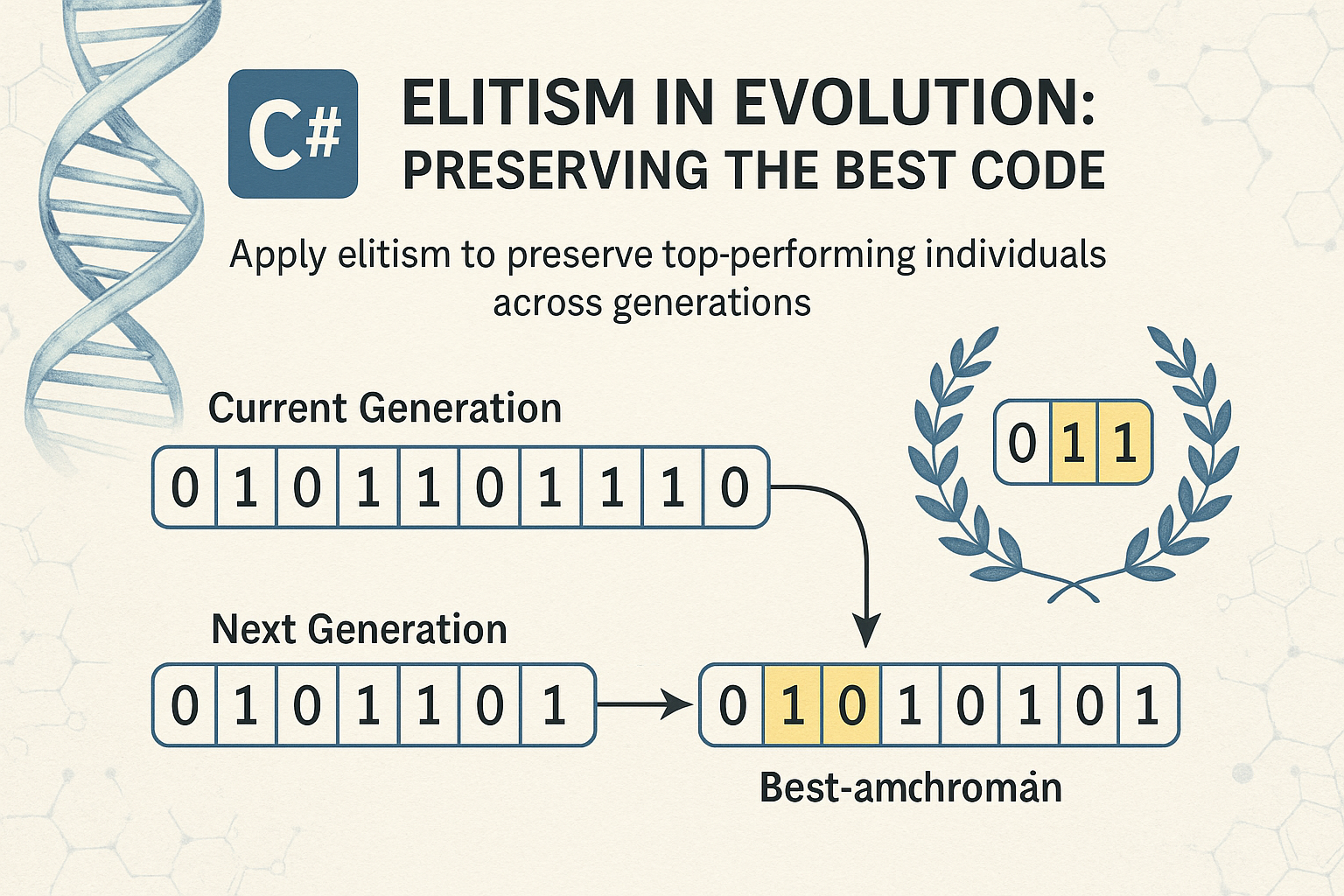
Natural selection favors the survival of the fittest, but evolution in the wild is not always efficient. In genetic algorithms, we can bias the process toward faster convergence by deliberately preserving top-performing individuals across generations. This technique is known as elitism, and it is one of the simplest yet most effective strategies for enhancing GA performance.
Today’s post focuses on applying elitism in a C# genetic algorithm to ensure that the best solutions are never lost. We will define elitism, explain its impact on the evolutionary process, and demonstrate how to implement it cleanly and effectively.
Continue Reading
Day 11: Implementing a C# Mutation Operator for Genetic Algorithms
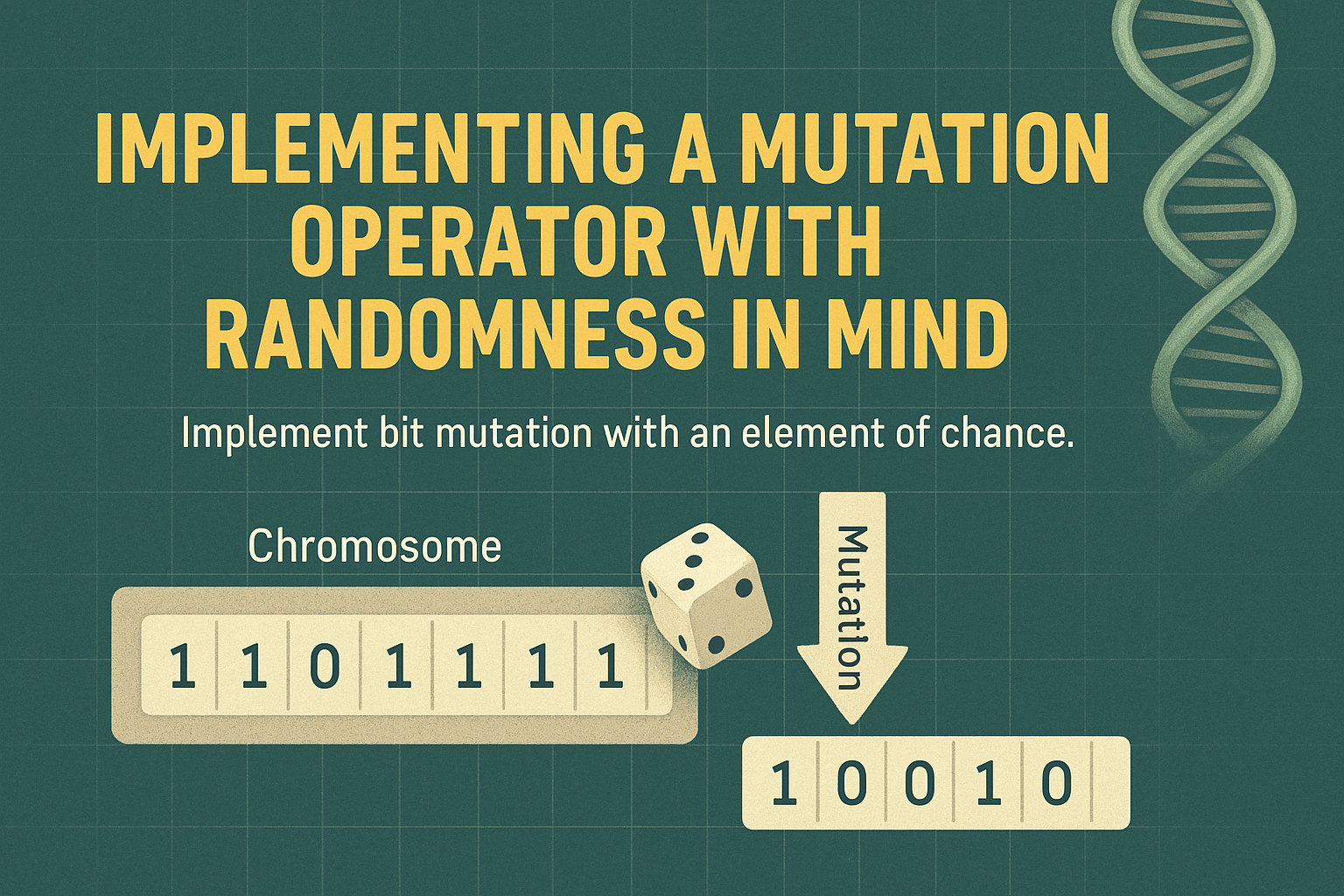
In yesterday’s post, we explored the importance of mutation in genetic algorithms. Mutation helps maintain genetic diversity, prevent premature convergence, and enable the discovery of better solutions through small, random changes. Today, we shift from theory to implementation.
Our goal is to code a mutation operator in C# that is both configurable and adaptable to different types of chromosomes. This operator will be a core component of your genetic algorithm loop, introducing the right level of randomness into your evolutionary process.
Continue Reading
Day 10: Mutation Matters in C# Genetic Algorithms
In biological evolution, mutations are rare, random changes in DNA that introduce new traits. While many mutations are neutral or even harmful, some spark evolutionary leaps. In genetic algorithms, mutation serves the same purpose: injecting fresh variations into the population to avoid stagnation and premature convergence.
Without mutation, a genetic algorithm can easily fall into local optima—improving early on but plateauing before reaching the best solution. Mutation helps keep the algorithm dynamic, ensuring exploration continues even when the population becomes homogeneous.
Today, we explore how mutation works, its importance in the evolutionary process, and how to implement it in C#.
Continue Reading
Day 9: Using Genetic Algorithm’s Uniform Crossover in C#
So far, we’ve explored one-point and two-point crossover strategies, which split chromosomes at predefined positions. These methods are effective for maintaining gene sequence structure, but they can be limiting when diversity is crucial. Enter uniform crossover—a technique that treats each gene position independently, offering greater mixing and a finer-grained approach to recombination.
Today, we’ll implement uniform crossover in C#, compare it with other strategies, and explore when and why you should use it.
Continue Reading
Day 8: One Point or Two? How Crossover Shapes Genetic Diversity
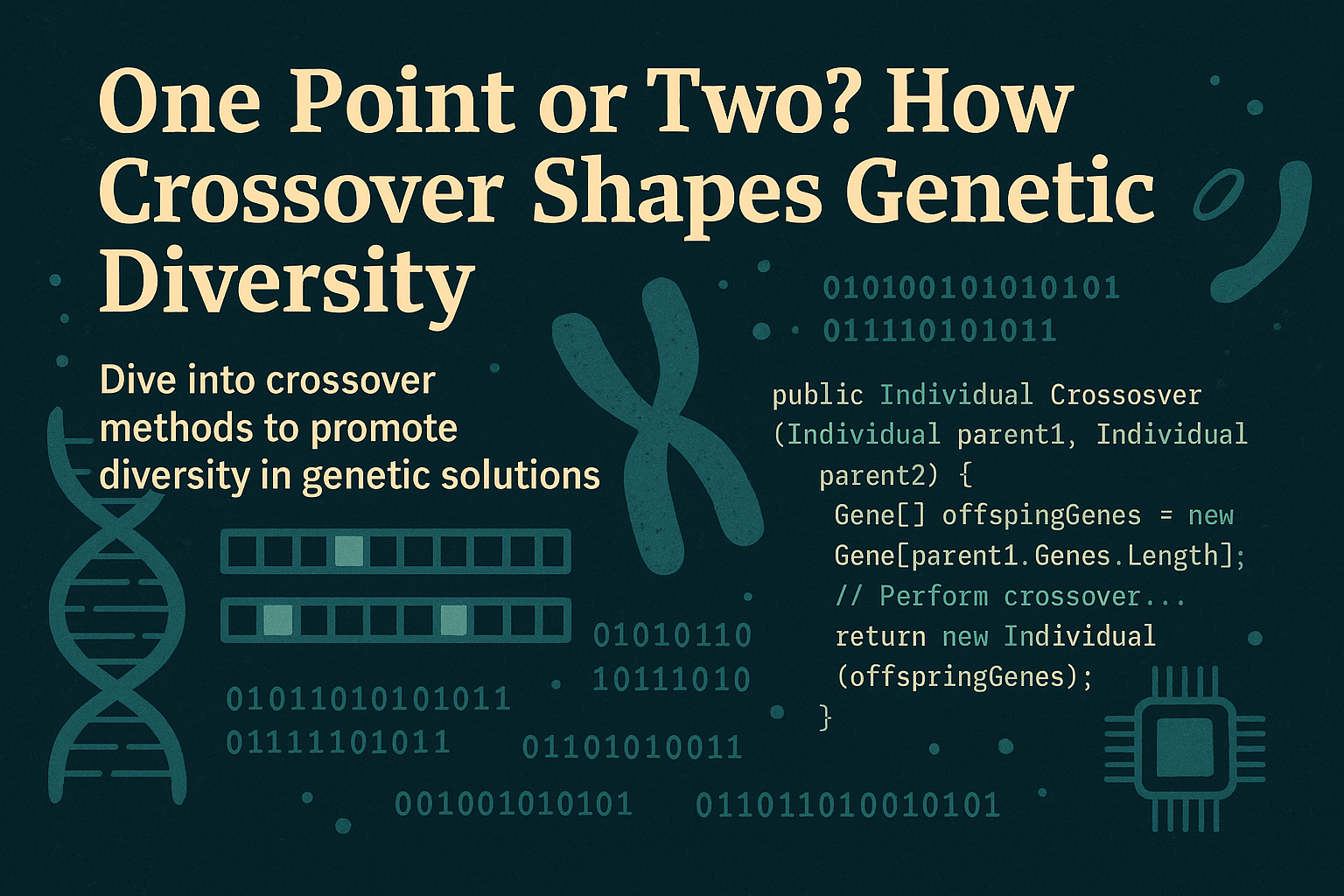
In the evolutionary process, crossover is the mechanism by which parents pass on their traits to offspring. In genetic algorithms, crossover plays the same role, combining genes from two parent chromosomes to produce new solutions. How you implement crossover significantly impacts the algorithm’s ability to explore the search space and avoid premature convergence.
Today, we dive into crossover methods in C#, comparing one-point, two-point, and uniform crossover, and how each influences genetic diversity.
Continue Reading
Day 7: Putting It Together: Simulating Your First Genetic Algorthm Cycle in .NET
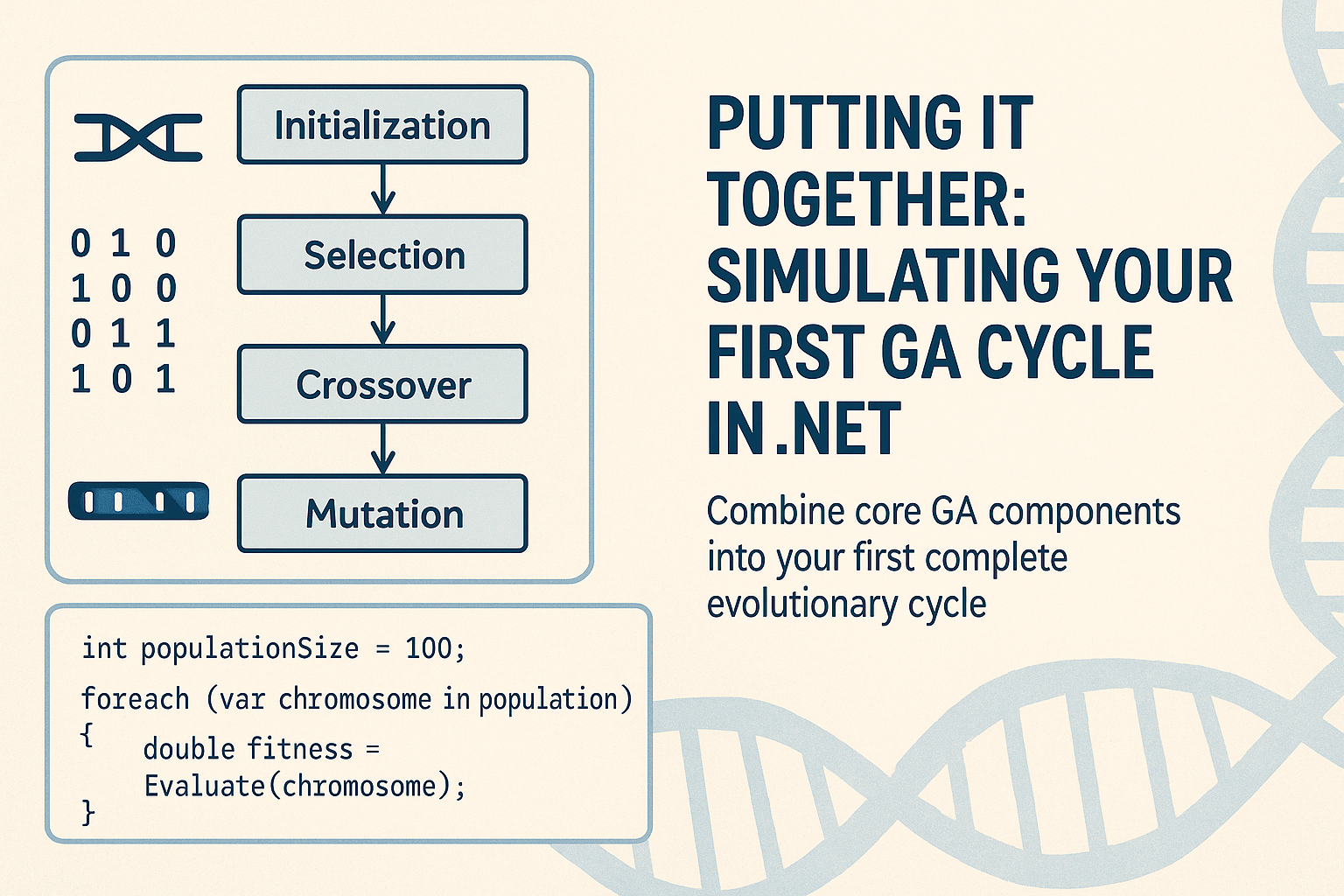
By now, you’ve learned the foundational components of genetic algorithms: chromosomes, genes, fitness functions, mutation, crossover, and selection. Today, it’s time to bring those elements together and run your first complete GA cycle using C# and .NET.
This post walks you through the structure of a single evolutionary loop—initialization, evaluation, selection, reproduction, and mutation—so you can simulate a working genetic algorithm and evolve real solutions.
Continue Reading
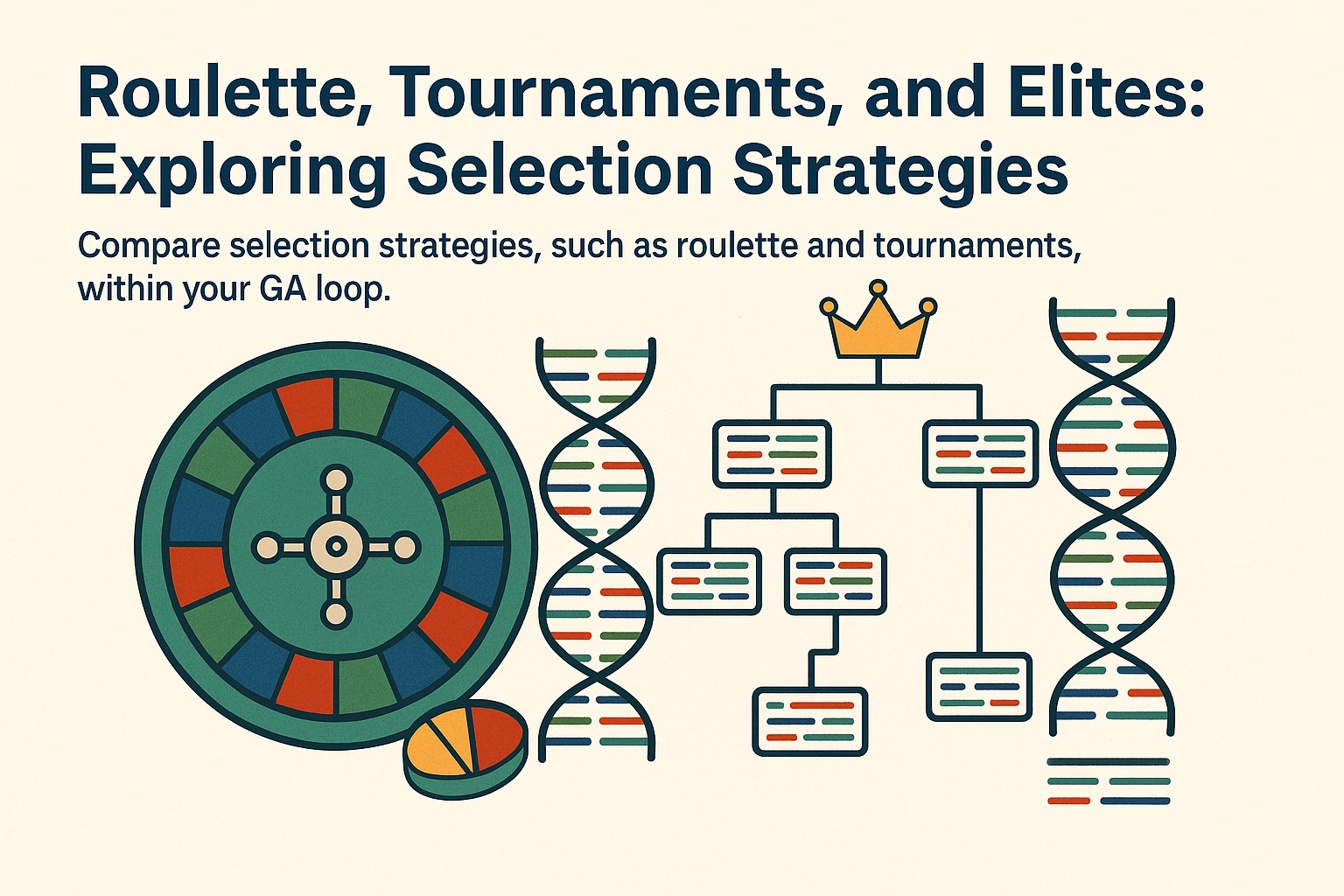
Day 6: Roulette, Tournaments, and Elites: Exploring Selection Strategies
Once you’ve calculated the fitness of each chromosome in your population, the next step in the genetic algorithm lifecycle is selection—deciding which chromosomes get to reproduce and which are left behind.
Selection strategies play a crucial role in balancing exploration (searching new areas of the solution space) and exploitation (refining known good solutions). Choosing the right strategy affects the convergence speed and the overall effectiveness of your genetic algorithm.
Today, we’ll explore the most common selection strategies: roulette wheel selection, tournament selection, and elitism. We’ll compare them and implement each one in C#.
Continue Reading
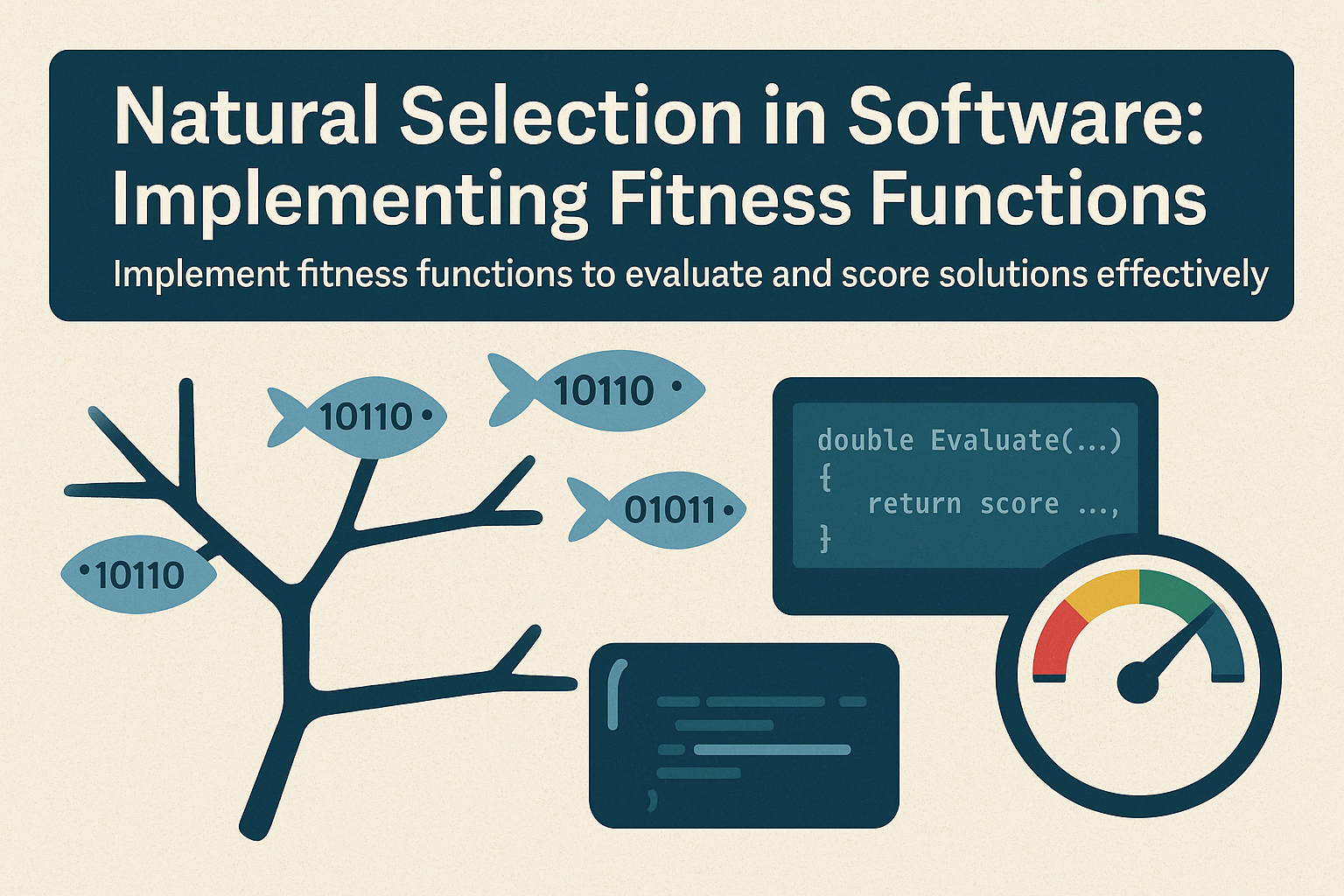
Day 5: Natural Selection in Software: Implementing Fitness Functions
In the natural world, organisms survive and reproduce based on their ability to adapt to their environment. This principle of natural selection is central to the effectiveness of genetic algorithms. In software, our analog to survival is fitness—a quantitative measurement of how well a solution performs.
Today, we focus on the role of fitness functions in guiding evolutionary progress in a genetic algorithm, and we’ll implement them in C# to evaluate and score candidate solutions effectively.
Continue Reading
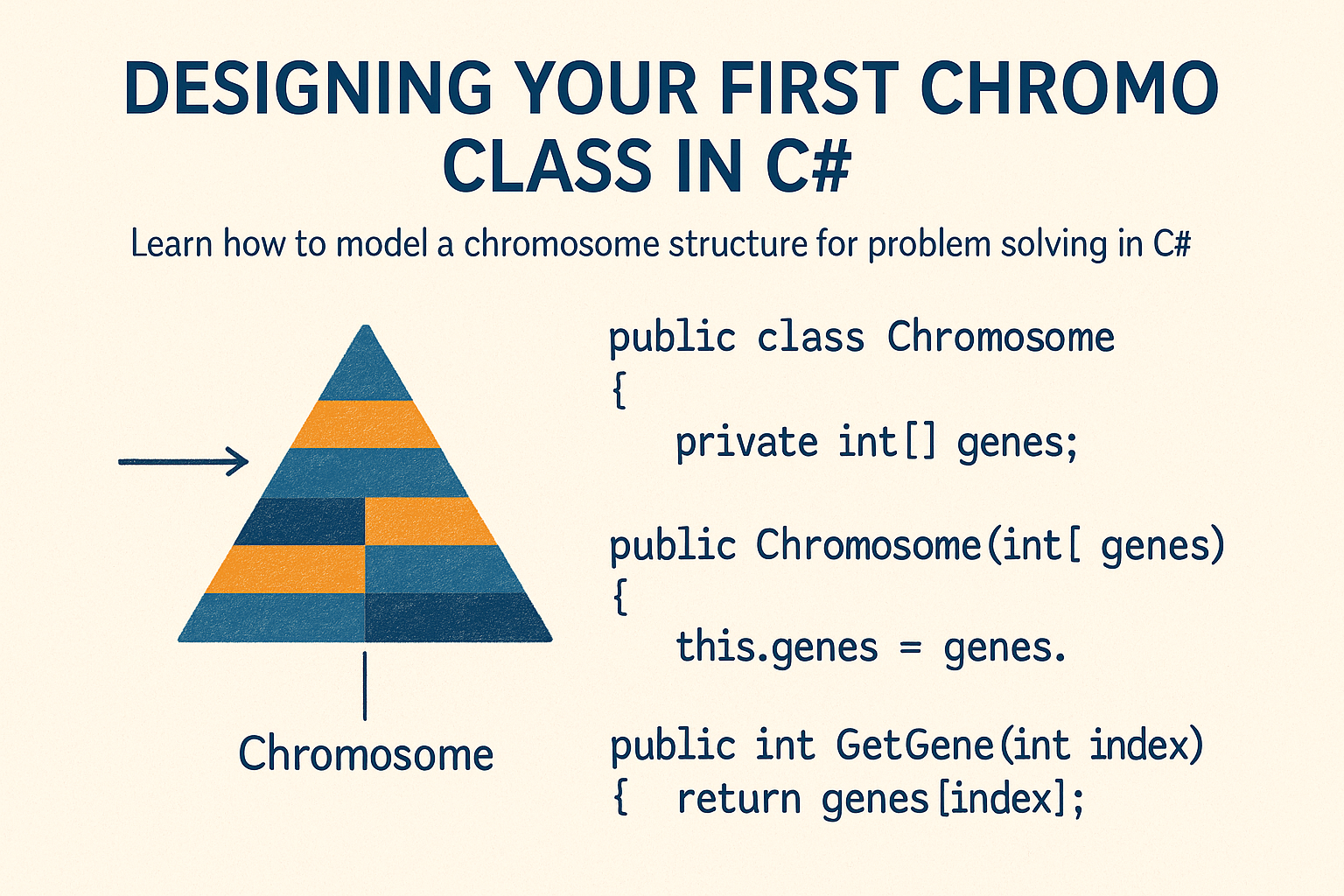
Day 4: Designing Your First Chromosome Class in C#
Now that we’ve explored the concept of genes and chromosomes in the context of genetic algorithms, it’s time to write some real code. Today’s goal is to design a reusable, extensible Chromosome class in C# that can serve as the foundation for solving optimization problems using genetic algorithms.
We will not only model the chromosome itself, but also lay the groundwork for operations such as initialization, crossover, mutation, and evaluation. Think of this class as the central actor in your evolutionary simulation.
Continue Reading
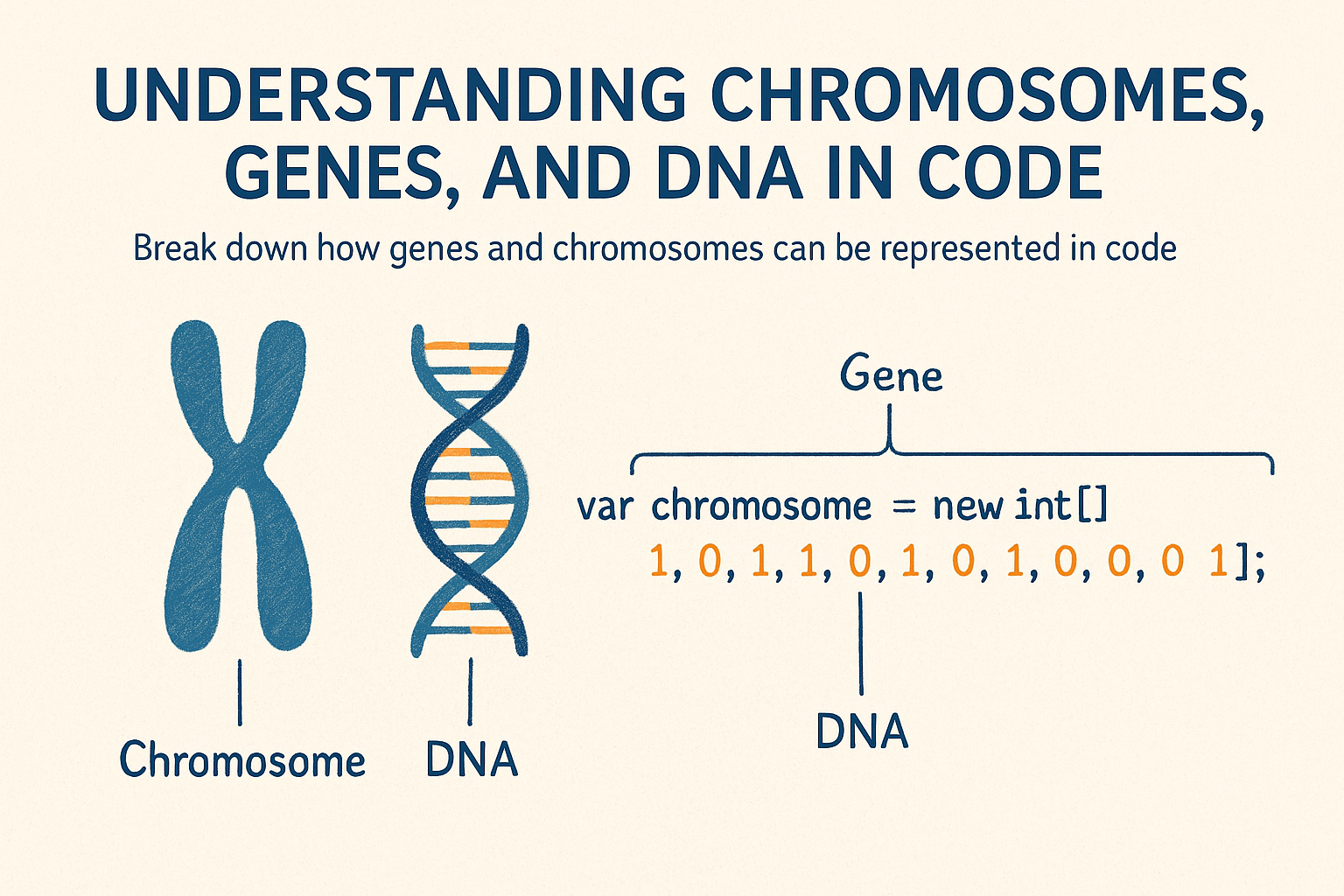
Day 3: Understanding Chromosomes, Genes, and DNA in Code
At the heart of every genetic algorithm lies the concept of evolution, and at the heart of evolution lies DNA. For software developers, the equivalent building blocks are chromosomes and genes. If we want our applications to evolve solutions over time, we need a reliable way to encode, manipulate, and assess those building blocks in our C# programs.
Today, we’ll take a closer look at how we can represent chromosomes and genes in C#, how to choose the right data structures, and how to build a model that is both flexible and performant.
Continue Reading